

Plant care · · 1 min read
How to care for a butterfly orchid
Butterfly orchids (Phalaenopsis) are easy to keep. How much light and water they need, when to repot, and how to get one to bloom again.
By Concord Flower Shop, Concord, Massachusetts
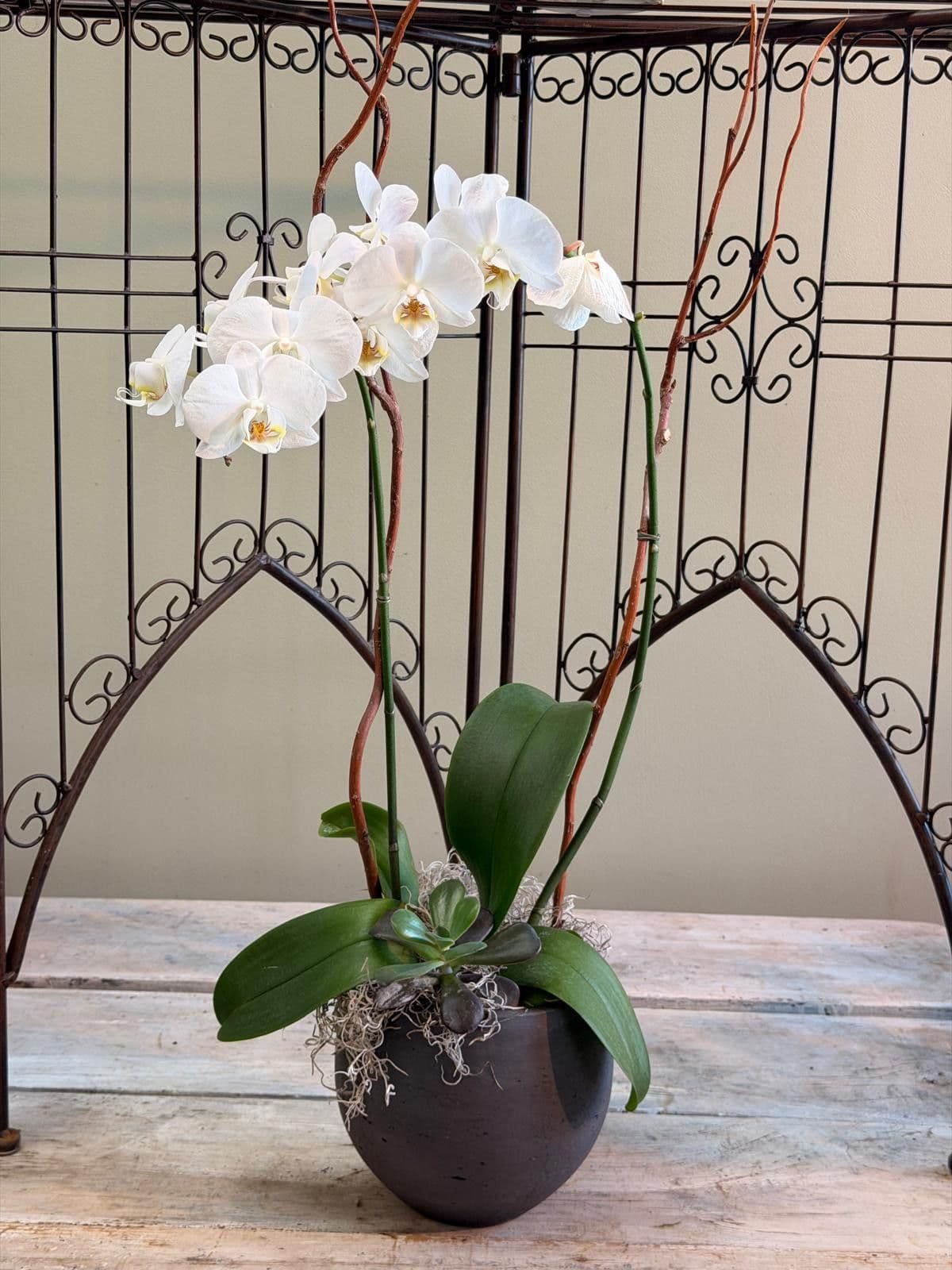
The butterfly orchid, or Phalaenopsis, is the orchid most often given as a gift, and one of the easiest houseplants to keep. Its flowers often last two to three months.
How much light does it need?
Bright light, but not direct sun. An east-facing window is ideal; a south or west window works with a sheer curtain. Yellowish leaves or scorched spots mean too much sun, and dark green, floppy leaves mean it wants more light.
How often should you water it?
About once a week, when the potting mix is nearly dry. Water it thoroughly at the sink, let it drain completely, and never leave the pot standing in water. More orchids die from too much water than from too little.
Does it need a clear pot?
It is not required, but it helps. The roots turn silvery when the plant is dry and green when it has been watered, and a clear pot lets you see that at a glance.
Will it bloom again?
Yes. When the last flower falls, cut the stem just above a node, the small bump on the stem, and the plant may send out a new branch of flowers. A few weeks of slightly cooler nights in the fall helps trigger a new flower spike. Feed it lightly with orchid fertilizer while it is growing new leaves.
When should you repot it?
Every two years or so, after it finishes blooming. Use fresh orchid bark rather than regular potting soil, which holds too much water for orchid roots.
Is it safe for cats and dogs?
Yes. The ASPCA lists Phalaenopsis orchids as non-toxic to cats and dogs.
You can see our butterfly orchid.